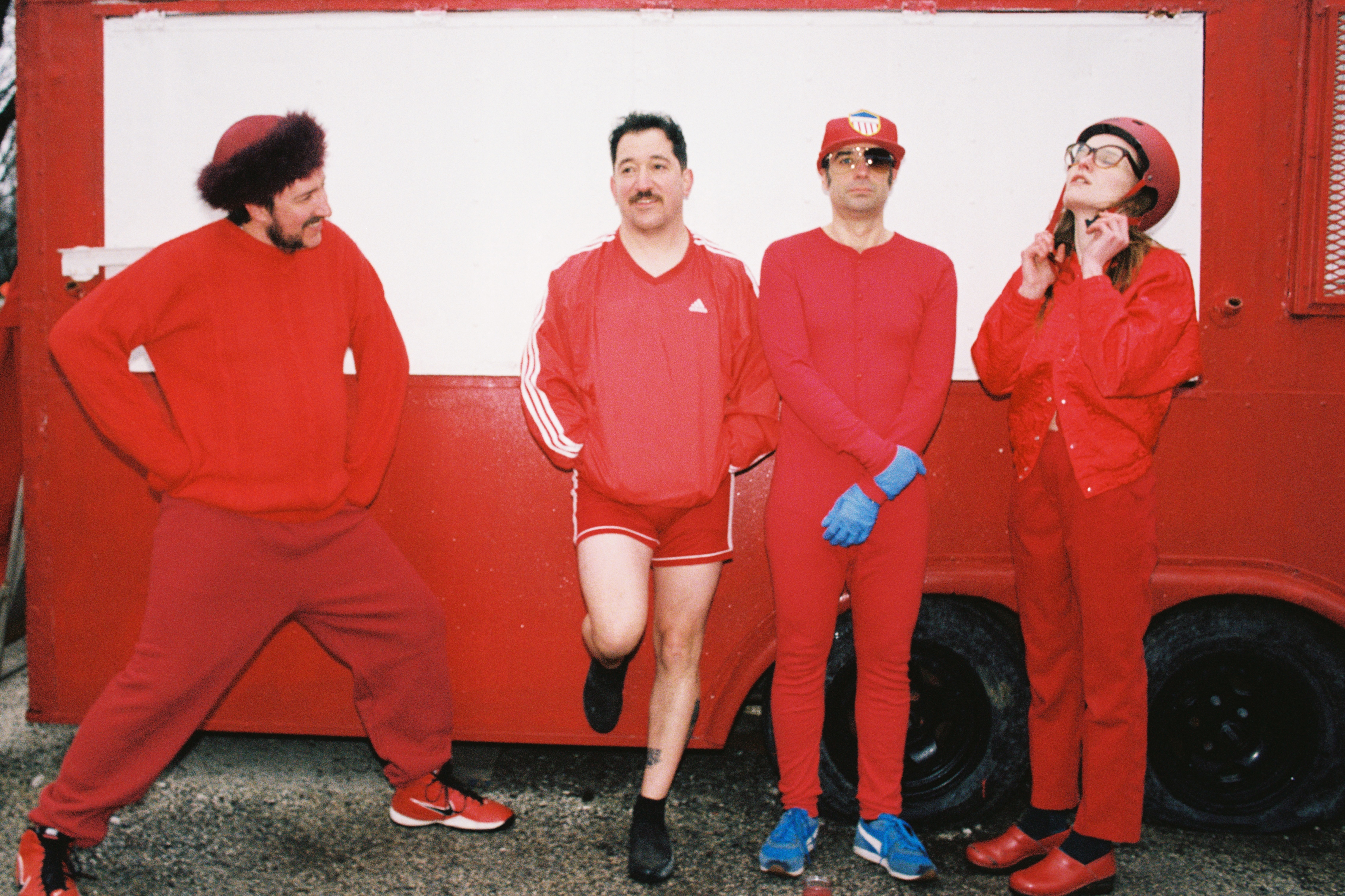
Absurdity and punk rock go together like celery and tonic water. That is to say, they are two acquired tastes that are even better together, because they push out the squares and cater to the real freaks. That spirit has driven Chicago’s Cel Ray from the very beginning. Springing to life with their debut EP Cellular Raymond in 2023, the Chicago four-piece of vocalist Maddie Daviss, guitarist Josh Rodin, bassist Kevin Goggin, and drummer Alex Watson charted a path through twitchy, absurdist post-punk that fell somewhere between The Minneapolis Uranium Club and The B-52s. Piss Park followed later that year, and aside from the “Raw God” single in 2025, the band spent their time ripping club shows across the Midwest, playing in DIY spots, dive bars, and, one time, being hand-selected to open for Jack White.
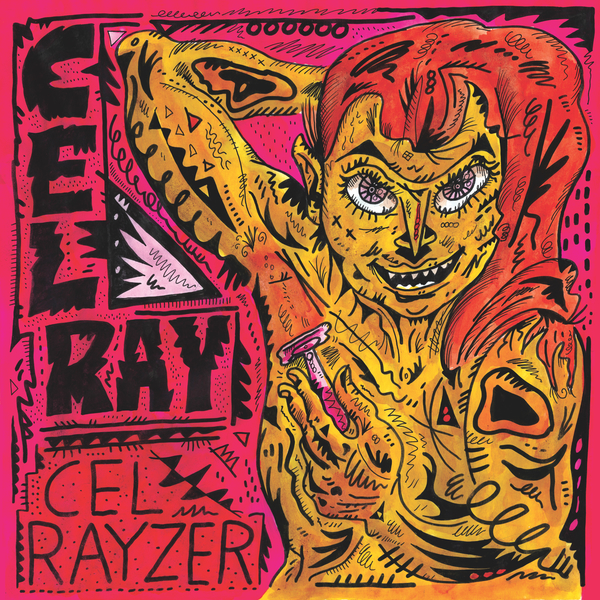
Now, after years of waiting for a proper full-length, Cel Ray has joined the illustrious noisenicks at Exploding In Sound to release Cel Rayzer, a record that, as its name subtly implies, is sharper and more acerbic than anything Cel Ray’s done before. This is, in part, to the band taking a more collaborative approach to writing than they had on their early EPs. As Daviss tells it, “Cel Rayzer was written at practice and in the studio together.” The studio in question was Chicago’s Jamdek Recording Co. where Doug Malone helped capture the band exactly as they are.
And what they are is even more tightly wound and focused, as opener “Gotta Get Away” displays in mere seconds. The band starts in familiar territory with Goggin’s melodic, propulsive bass line locking in with Watson metronomic drums, but once Rodin’s guitar kicks in alongside a supercharged Daviss, the band feels far heftier than ever before. Gone are the nervous jitters, the kind triggered by a simple coffee rush, replaced with high-powered truck stop speed, the kind that gets you so hopped up you can see through the very fabric of time itself. Lyrically, Daviss expounds on the feeling of winter’s stifling grasp, one that follows you indoors and pervades your entire being. “The song was conceived in winter, when I felt very stuck in my home, work, and routines,” says Daviss. “I get too depressed in a way that makes me feel incapable of planning anything, like the grass could always be greener on the other side, but you’re too down and anxious to even investigate the other grass.”
But no part of Cel Rayzer is morose. All that introversion and intrusive thinking ends up informing the whole of Cel Rayzer. “The album’s really about the frenzy and detritus of the modern world,” says Daviss. “Price of Gas” is an incisive bit of theatrics from Daviss, as she inhibits the spirit of someone who—actually, it’s better if Daviss tells it: “This song is a rock opera from the perspective of an American man who is obsessed with the price of gas. He has bottled all his troubles and resentments at the country into the rising gas prices, and how they are keeping him down. He desperately wants to impress his wife, provide for his family, and be behind the wheel constantly, but the cost of living keeps rising without him. He blames the price of gas and his wife for his unlucky lot in life to the point of madness, never seeing the bigger picture.”
This type of guy is someone we all know some version of, and it’s a perfect blend of Mark Mothersbaugh and Jello Biafra, a look into the psyche of someone so preoccupied, paranoid, and distinctly American, that you can’t help but get a sense that there’s thousands of Gas Guys lurking all around you at any given time. On the narrative flipside, Cel Ray ponders the feelings of trash and its assorted receptacles from the point of view of freedom instead of consumerist failings. “What a pleasant existence trash must have, just being put all over the place without a thought. How many secrets trash knows? So much good trash out there. So much waste, it’s tragic,” says Daviss. The song’s rollicking conclusion boasts a ripping guitar solo from Rodin, sounding like a soda bottle run over in traffic and rocketing straight up into the sky.
What makes Cel Rayzer so impactful is the inability to pin it down. Yes, it’s garage punk; yes it’s egg-punk; yes it’s post-punk, but it’s beholden to none of those things. The closing track, “Treat Economy,” is a trenchant critique of a reliance on sweets and snacks as stand-ins for genuine salves, and it features a breakdown so heavy that, in the right setting, might get kids in camo pants to throw a spinkick. “Snake’s Maw,” the album’s centerpiece, is a song that literally dials down the speed but shows that Cel Ray retains their power even when they allow themselves the room to stretch out. It highlights how dexterous each member is, able to completely subvert what the listener expects while still sounding exactly like Cel Ray.
This is what makes Cel Rayzer such a thrill; Just when you think you have the band figured out, they transform into something else so effortlessly, you’re left wondering how they even pulled it off.
Bio: David Anthony
Photo: Gianni Segarra